


What Can Marketers Learn From Three Different Experiential Campaign Mechanics?

By Dennis Walthers | Founder & CEO, Interactive Dallas | Author of The Experiential Advantage
Study why people participate, then redesign the delivery for your own event.
Experiential case studies are most useful when they explain why guests participate and how the event team supports that participation. Personal transformation, curiosity, and creative contribution produce different interactions. Learn the mechanism, then adapt its staffing, output, capacity, and brand connection to the next brief.
Why is copying a successful activation risky?
Copying the visible equipment can miss the work that made a previous experience effective. A flattering image, an engaging exhibitor employee, or a delivery method that removes waiting can each change the outcome. A case study should identify those conditions instead of presenting client logos as universal proof.
How should you read a case study?
Ask what the guest wanted, what the brand wanted, and which production decision connected them. Record firsthand observations precisely. Identify planned concepts as planned, count photos as photos, and avoid turning inquiries or guest enthusiasm into unverified revenue claims.
Three mechanisms from the operator’s perspective
Personal transformation: at a beauty-industry trade show, we recreated looks selected with the client’s team. Guests chose styles, reacted to the elevated results, and sometimes tried several. Staff used those openings for product discussion and samples. The mechanism was seeing a personally desirable outcome.
Curiosity: Iris Photography gives guests a result drawn from their own eye. At an apartment-industry show, dedicated exhibitor employees supported conversations before capture and sharing afterward. The interaction around the artwork mattered alongside the photograph.
Conversation: for a planned home builder open house, The Day You Were Born offered a way to talk about celebrity birthdays and music from a guest’s birth year. The intended bridge was a simple question about what brought the guest in. That forthcoming use illustrates the concept without claiming an event result.
How can an AI campaign portrait make the message personal?
An AI photo experience can put the guest inside an approved campaign world rather than placing a logo around a generic photograph. In Interactive Dallas’s Southwest Airlines project, the superhero treatment connected the guest image to the campaign’s creative theme. For a new brief, define the intended transformation, approve representative outputs, and decide how the printed or digital takeaway supports the next conversation.

How can iris photography make an abstract idea tangible?
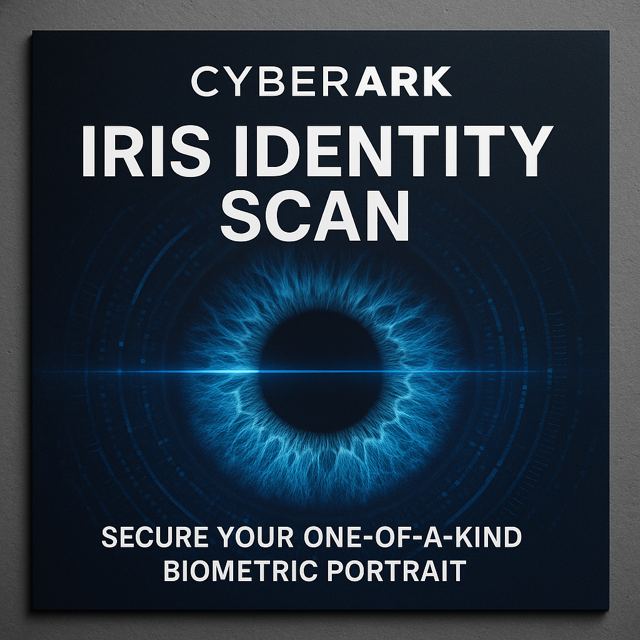
Iris photography creates a personal artwork from a close-up photograph of the guest’s eye. Interactive Dallas’s CyberArk project used that visual individuality as a storytelling connection to identity security. The portrait was a creative conversation starter, not a demonstration of authentication technology. A new campaign should establish the same clear relationship between the takeaway and the message, while explaining capture, image handling, and delivery to participants.
How can digital graffiti give guests creative ownership?
Digital graffiti changes the guest’s role from observer to creator. Interactive Dallas’s Nissan campus campaign connected touchscreen artwork with a vehicle through projection mapping, letting participants see their own contribution within the brand environment. That project illustrates a useful design principle: make the product or message part of the action. A new installation needs its own creative assets, display plan, operating footprint, and permissions.
What should you carry into the next brief?
The published Southwest, CyberArk, and Nissan examples below illustrate additional ways to connect participation and brand meaning. Compare the mechanism in each case with the firsthand examples above. Reuse the design lesson, then develop an original treatment for the new client.
What should the comparison include before you book?
A useful case-study discussion includes the constraint and the adjustment as well as the creative idea. Ask which parts were tested, what changed after guest feedback, what the team actually observed, and which outcomes remain unknown.
Are qualitative case studies useful?
Yes. They can show creative logic and execution details even when they do not establish financial ROI.
Should every new campaign use a different technology?
No. A familiar format can support an original idea when the story, audience role, and output are specific.
How can Interactive Dallas help you plan the next step?
Interactive Dallas works with brands, agencies, and event teams to match interactive experiences to campaign goals. Share your audience, event date, venue, expected guest volume, and desired outcome so the team can recommend an appropriate creative and operating approach.
Dennis Walthers founded Interactive Dallas in 2011. His work focuses on experiential brand activations and interactive event technology. Based in Dallas, the company supports events across Texas and beyond.
Last updated: October 28, 2026.


Comments