


How Do Roaming Light Ring Photo Activations Work in Dallas?

Updated: Oct 25
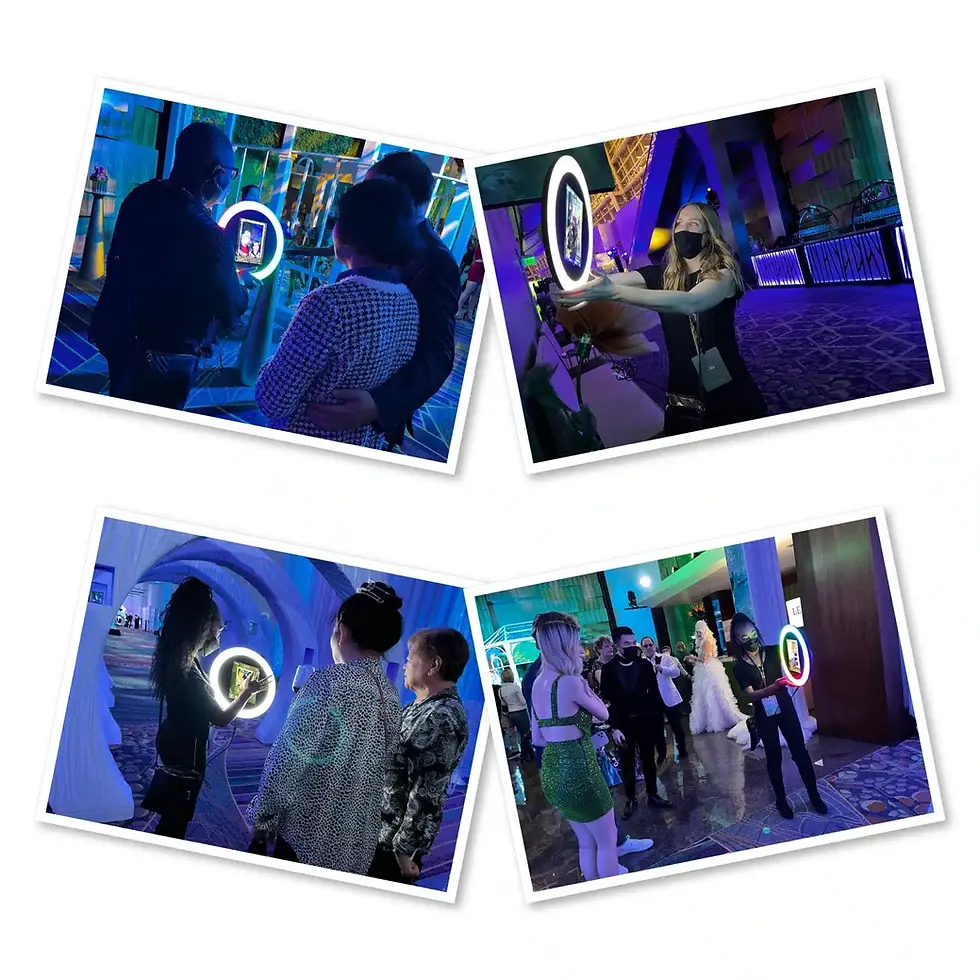
A roaming light ring brings a staffed photo capture experience to guests around the venue. It can suit a reception or activation where a fixed photo station would interrupt the flow. Plan coverage zones, approved branding, guest consent, connectivity, and delivery, and confirm the exact AI options in a demonstration before booking.
By Dennis Walthers, Founder & CEO, Interactive Dallas
Updated October 25, 2026
What does a roaming light ring experience include?
The Interactive Dallas roaming light ring overview, reviewed October 25, 2026, describes mobile ring-lit photography with branded overlays, AI-enhanced group photos, creative AI filters, and text or email delivery. Availability, processing time, staffing, and package scope should be confirmed for your event.

When is roaming photography a better fit than a fixed booth?
Consider roaming capture when guests circulate through a cocktail reception, sponsor area, or large event space. The operator can approach people where participation is convenient rather than asking everyone to visit one station. A fixed booth may suit a brief that needs a controlled backdrop, a defined camera position, or a consistent queue and delivery point.
Roaming does not mean zero waiting or unlimited coverage. An operator can only capture one group at a time, and crowded rooms, conversations, lighting, and delivery questions affect the pace. Define the coverage area and expected guest interaction before selecting the number of operators.
How should you plan the guest journey?
Agree where operators can circulate and which sessions or areas should remain undisturbed.
Use a short invitation that explains the photo, branding, and delivery choice.
Ask willing guests to pause in a suitable position, then capture and review the image.
Apply the approved treatment and help the guest use the agreed delivery method.
Keep walkways, catering routes, entrances, and exits clear while the group participates.
Confirm whether the proposal covers still photos only or also GIFs, short motion formats, AI processing, prints, a sharing station, or a hosted gallery. A product label does not establish which deliverables are included.
How do you make the branding visible without overwhelming the portrait?
Approve a test output with the real logo, campaign colors, and a readable message. Check the image on a phone and in any planned print size. Agree how AI styling interacts with faces, clothing, logos, and the final crop. Assign someone to approve revisions before the event.
What operating details belong in the quote?
Coverage: Event hours, venue areas, operator count, breaks, and any staged group moments.
Technical setup: Lighting, device power, connectivity, software workflow, and backup arrangements.
Creative work: Approved artwork, output dimensions, AI treatments if selected, and revision timing.
Delivery: Text or email workflow, gallery arrangements, support for failed deliveries, and any printing.
Reporting: Which counts are available, how they are defined, and when the report is delivered.
Request an event-specific price with travel, staffing, creative work, and any optional deliverables identified. Do not assume that additional operators or AI features are included without written confirmation.
Which results should you track?
Count completed capture sessions, successfully delivered assets, and voluntary guest feedback separately. If lead generation is a goal, define the qualification and optional marketing process in advance. A delivered photo is not proof of a public social post, a brand impression count, or a sale.
For planning, divide available operating minutes by the rehearsed complete session time and allow for walking, pauses, retries, and delivery help. If a hypothetical cycle is two minutes, the arithmetic ceiling is 30 sessions per hour before those allowances. It is not a promised capacity for a roaming event.
What problems should you ask about before booking?
What if the room is too crowded for operators to move?
Agree coverage zones and quieter capture points with the venue. Keep the operator out of service routes and avoid gathering groups where they block movement. A small fixed capture area may be a better choice for a particularly constrained room.
What if guests do not want to be photographed?
Make participation optional and train operators to accept a decline immediately. Explain how the image will be used and delivered. Receiving a keepsake should not be confused with agreeing to marketing messages.
How do we handle weak venue internet?
Test the actual capture, AI processing, and delivery workflow on site where possible. Ask which steps require connectivity and agree a backup or delayed-delivery process. Do not promise instant delivery when the connection and processing have not been tested.
Can AI filters be added to every group photo?
Confirm the supported treatment, group arrangement, review process, and processing time in a live demonstration. Test representative groups and decide what staff should do if the output is unsuitable. The proposal should identify the exact feature being supplied.
How do we avoid gaps in coverage?
Give the team a venue plan, key timing, priority areas, and an on-site contact. Decide whether the brief is informal roaming or a list of must-capture groups. Match operator count and hours to that scope instead of assuming one person can cover every area simultaneously.
How do you request a roaming photo activation?
Send the date, venue, operating hours, audience, priority areas, desired branding, and delivery needs. Request a roaming light ring proposal and a current sample of the selected output so the creative and operating scope can be approved together.


Comments